Why Smart Training Works: 6 Principles for Better Results, Less Effort, and More Energy for Life
Jon Ackland
Exercise Scientist • High Performance Consultant • Endurance Specialist
WHAT THIS ARTICLE WILL HELP YOU SEE
why the body improves under some training plans and not others
where real adaptation is happening — and where effort is being wasted
how to read a training plan with more clarity, confidence, and judgment

Most training plans explain what to do.
This explains why certain plans actually improve the body — and why others, even when done with commitment, do not.
It will help you see where progress is being built, and where effort is being lost.
You may already have experienced this without having words for it: training hard, staying disciplined, yet not improving as expected. Or improving for a while, then flattening out. Usually, the problem is not effort. It is that the training signal is unclear, mistimed, or poorly absorbed.
To understand this, you need to see the deeper order underneath what most people call training.
These six principles are the framework I use to interpret most effective training plans, whether the goal is health, endurance, or elite performance.
When these principles are in place, training becomes clearer, more productive, and less draining on the rest of life
What the Body Responds To
Training works because the body is built to adapt.
Modern endurance training is really a deliberate manipulation of that adaptive ability.
The body responds to what it repeatedly faces.
Training works best when those demands reflect the event itself.
A good plan is more than numbers to complete day by day. Every session should have a clear relationship to the event it is preparing you for. It gives the body a clear reason to adapt — and a direction for improvement.
Underneath that are a small number of principles that determine whether training actually works.
In most training books, these principles appear early and are quickly passed over. They are easy to overlook, but they shape almost every intelligent training decision that follows.
These are the foundations beneath smart training.
The science gives us the broad principles. What follows is my coaching framework for making them practical.
Principle 1: Practice What the Event Demands (Specificity)
One useful way to think about training is to break an event into its component tasks, practise them well, then progressively join them back together.
Done well, the whole begins to reflect the event itself — and success becomes more likely.
Each session should solve one part of the event clearly.
That only works when the demands of the event are understood clearly — the real rules of the game.
For someone new to the marathon, one useful truth is the first 30 kilometres is a controlled warmup; the final 12 decides what remains.
That changes how you think about the event.
It changes how your training should look, because the event is asking for more than endurance alone.
This is specificity.
The body adapts closely to the task it repeats.
A good programme begins with a clear target, then chooses exercises that develop that target directly.
Precision matters more than volume or effort: the closer training reflects the real demands, the more useful each session becomes.
Principle 2: Four Ways the Body Learns
Exercise is how you show the body what you want it to learn.
The body responds to what it sees often and clearly. When a movement is repeated well, it begins to recognise that movement as important and becomes better at producing it.
Each exercise sends a message.
The clearer the message, the better the response.
In my coaching model, most endurance training can be understood through four basic training types:
Technique — repeating the movement well until it becomes efficient and reliable
Technique Endurance — holding that quality of movement for longer before form begins to fade
Strength Endurance — adding resistance so the movement can be sustained under greater load
Speed or Speed Endurance — performing the movement faster for longer while still holding control
I find these four types explain much of what athletes are trying to build in endurance sport.
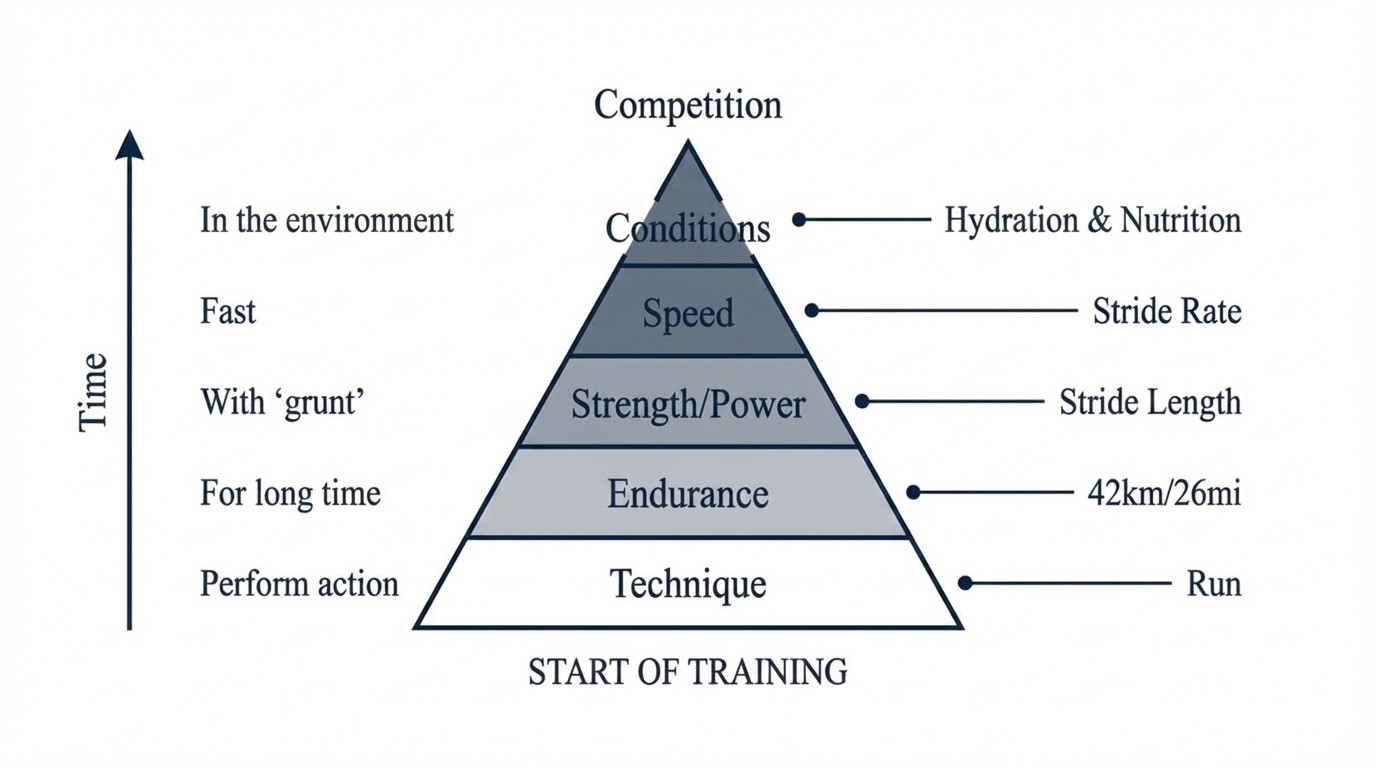
Figure 1. Training has a logical order. First learn the action, then sustain it, then add force, speed, and finally adaptation to the event environment. Each layer builds on the last.
Each has many variations, but together they act like training building blocks — the pieces used to shape a programme.
A coach adjusts those blocks according to event demands, experience, and weakness.
Some goals require more of one type. Others need a different balance.
A good plan usually combines several, because most events demand more than one quality.
This is not the only way to organise training, but it is the sequence I most often find useful in practice.
Principle 3: Use the Right Tool at the Right Time (Progression)
Once the training tools are clear, the next question is timing.
The body does not respond well when everything is pushed at once.
If too many qualities are trained aggressively at the same time, the signal becomes blurred.
Training works better when one quality is given priority while others are maintained.
That priority then changes across time.
This is progression.
Each phase prepares the body for what comes next.
In many cases, especially with developing athletes, skill comes first. Endurance follows. Strength is then added. Speed is often built more effectively on top of that base.
This kind of ordered development is one of the main ideas periodisation is built around.
Each stage has a purpose, and each stage helps the next stage work better.
A marathon makes this easy to see.
First, the runner needs sound movement. Good technique improves efficiency.
Next comes the ability to hold that movement for longer. Distance increases so technique survives fatigue.
Then strength matters more. In running, that often means improving force through each step so stride length becomes stronger and more effective.
Once that base exists, speed can be developed by increasing how quickly those stronger strides repeat.
Longer stride combined with quicker turnover is what allows speed to appear.
Near the event, training shifts again. Load reduces, freshness returns, and attention moves toward pacing, conditions, and execution.
This final stage is tapering.
A useful question when reviewing any plan is simple:
Can you see the phases changing across time?
A good plan usually shows clear periods where one quality is emphasised more than the others.
The order also matters:
Beginners usually improve most through technique and endurance
Intermediate athletes often benefit most from endurance and strength
Experienced athletes usually need more strength and speed
Weakness should always influence what receives most attention
Each phase needs enough time for the body to settle into change.
In practice, I often find two to four weeks is enough to create progress without losing momentum.
Too short, and adaptation does not fully take hold.
Too long, and improvement often slows because the body becomes too familiar with the same demand.
Progress depends on giving the body new problems in the right order.
Principle 4: Progress Requires More Than Repetition (Overload)
Once the phases are clear, the next question is simple: what makes the body continue to improve inside each phase?
The body only improves when it has a reason to.
A famous story from ancient sport tells of Milo of Croton lifting a calf each day as it grew. At first the weight was small. Over time the calf became a bull and things got heavy. His body adapted because the load kept increasing.
That is the basic idea behind overload.
The body needs a challenge slightly beyond what it is already used to.
Without that challenge, there is little reason to change.
That challenge can appear in different ways.
You may train longer.
You may train harder.
You may repeat an exercise more times.
You may add a new skill that demands more control.
What matters is that the work asks a little more than before.
The amount must still be right.
Too little changes very little. Too much creates trouble.
Fatigue rises too quickly, recovery suffers, and injury or illness becomes more likely.
The best load sits in the middle — enough to stimulate change, but not so much that the body cannot absorb it.
This change in ability is what we call fitness.
A simple way to think about it is:
You begin at your current level
training creates fatigue
recovery follows
the body rebuilds slightly stronger than before
This is overcompensation.
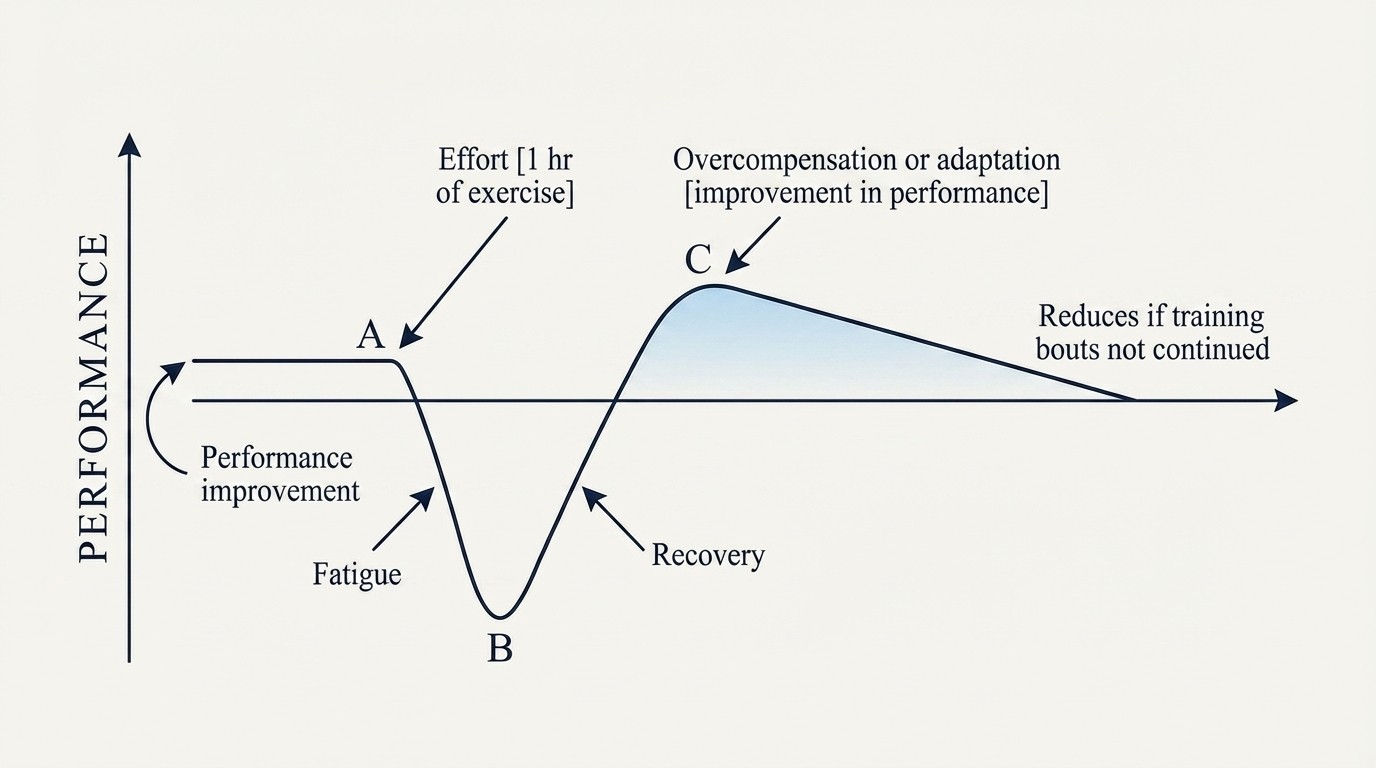
Figure 2. Training creates a stimulus that first lowers performance through fatigue (A to B). If recovery is sufficient, the body adapts and performance rises above its previous level (B to C). A is the old ability; C is the improved ability.
The body prepares itself better for the next time it sees the same demand.
That is why load must continue to rise.
If the work never changes, improvement slows.
A sixty-minute run makes this obvious.
The first time it may improve fitness because it challenges you.
The second time, done the same way, may still help.
But repeated unchanged for weeks, the body begins to treat it as normal.
At that point you are no longer ‘training’.
You are ‘maintaining’ what you already have.
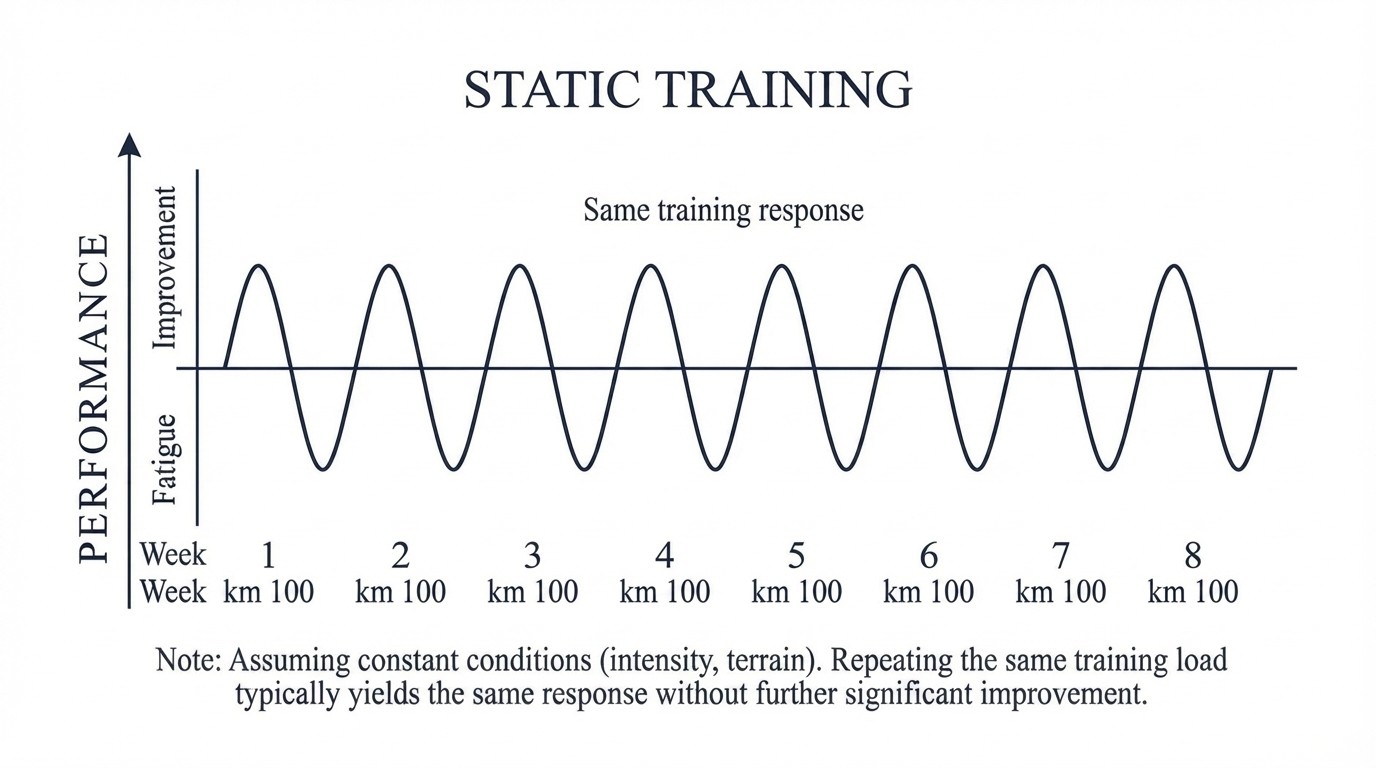
Figure 3. Repeating the same training in the same way usually produces the same response. Small gains may still occur for a time, but without progression the stimulus becomes too familiar and improvement eventually plateaus.
Many people believe they are training when they are really maintaining.
Progress depends on workload moving forward in a controlled way.
A simple way to describe workload is:
Training load is simply intensity multiplied by volume.
Intensity is how hard the work is. Volume is how much work is done.
A good plan usually increases one or both over time.
A useful question when reviewing a plan is:
Does the workload rise gradually across the training period?
In practice, a simple pattern often works well:
build volume steadily through the first half
reduce volume later to freshen the body
place more important intensity in the second half, closer to the goal
This gives the body a clear reason to keep adapting. Performance improvement usually depends on the right training at the right time.
Principle 5: How to Absorb Training (Recovery)
Overload only works if the body has time to absorb it.
A hard session does not make you better in that moment. It makes you tired.
Finish a sixty-minute run and you are not stronger at the end of it — you are carrying fatigue.
Repeat that same run immediately, and fatigue rises again.
Repeat it again and performance begins to fall.
This is why exercise alone is not improvement.
Exercise creates the stress. Recovery creates the adaptation.
Without recovery, the body has no chance to rebuild.
A training plan is therefore never just a plan for exercise. It is also a plan for recovery so stress and recovery are working together.
Recovery works at three levels:
Within the week (microcycle)
Hard and easy days need balance.
After demanding work, the body usually needs easier movement, lighter work, or rest before another demanding session.
The goal is not to remove fatigue completely, but to stop it accumulating faster than the body can absorb.
A simple question helps:
Does the week look balanced?
Rule: Alternate hard days with easy days and keep ‘like’ workouts apart.
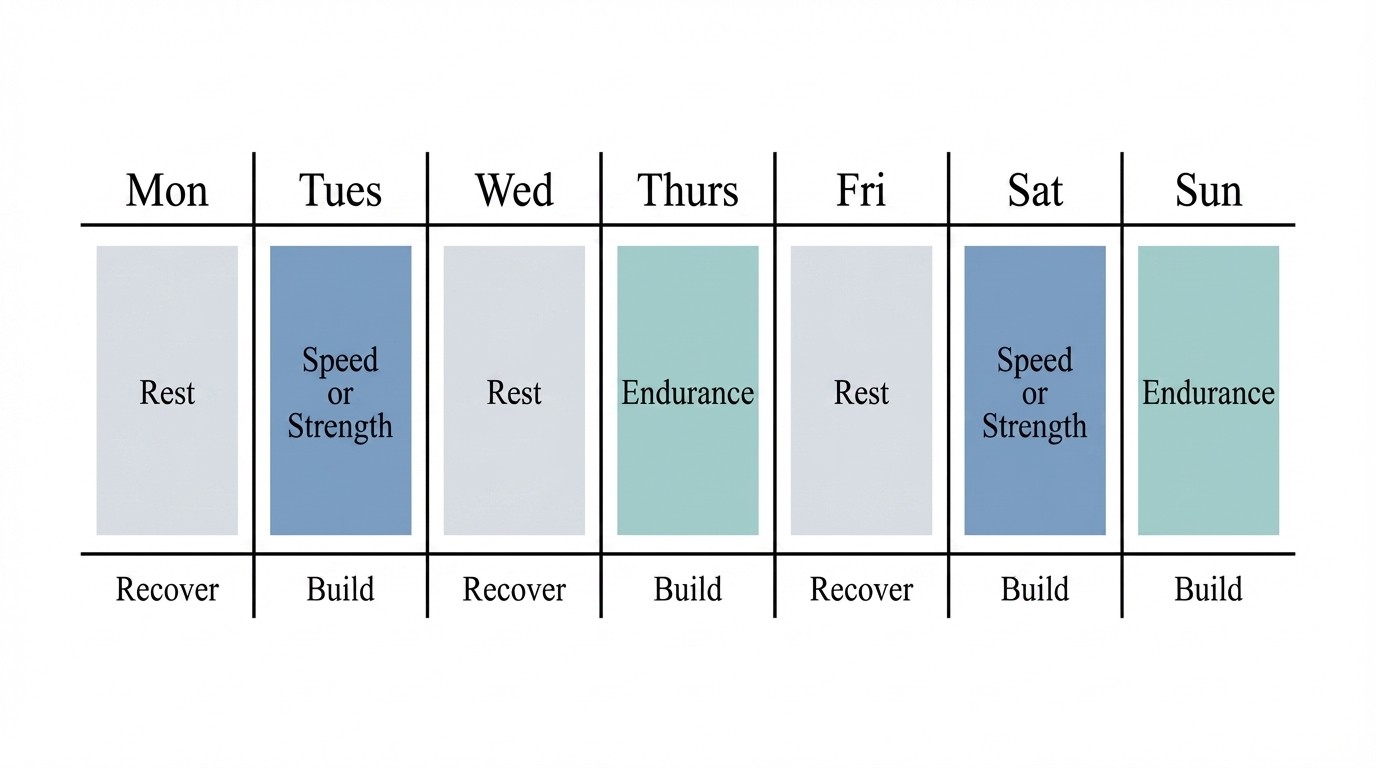
Figure 4. Microcycle weekly structure should manage fatigue from day to day. Alternate harder days with easier days, and keep similar workouts far enough apart to maintain quality and recovery.
Across several weeks (mesocycle)
Even well-balanced weeks eventually accumulate fatigue.
This is why harder weeks are usually followed by a lighter week.
In practice, two weeks building load, one week reducing load often works well.
Without this step, tiredness quietly accumulates until training quality begins to fall.
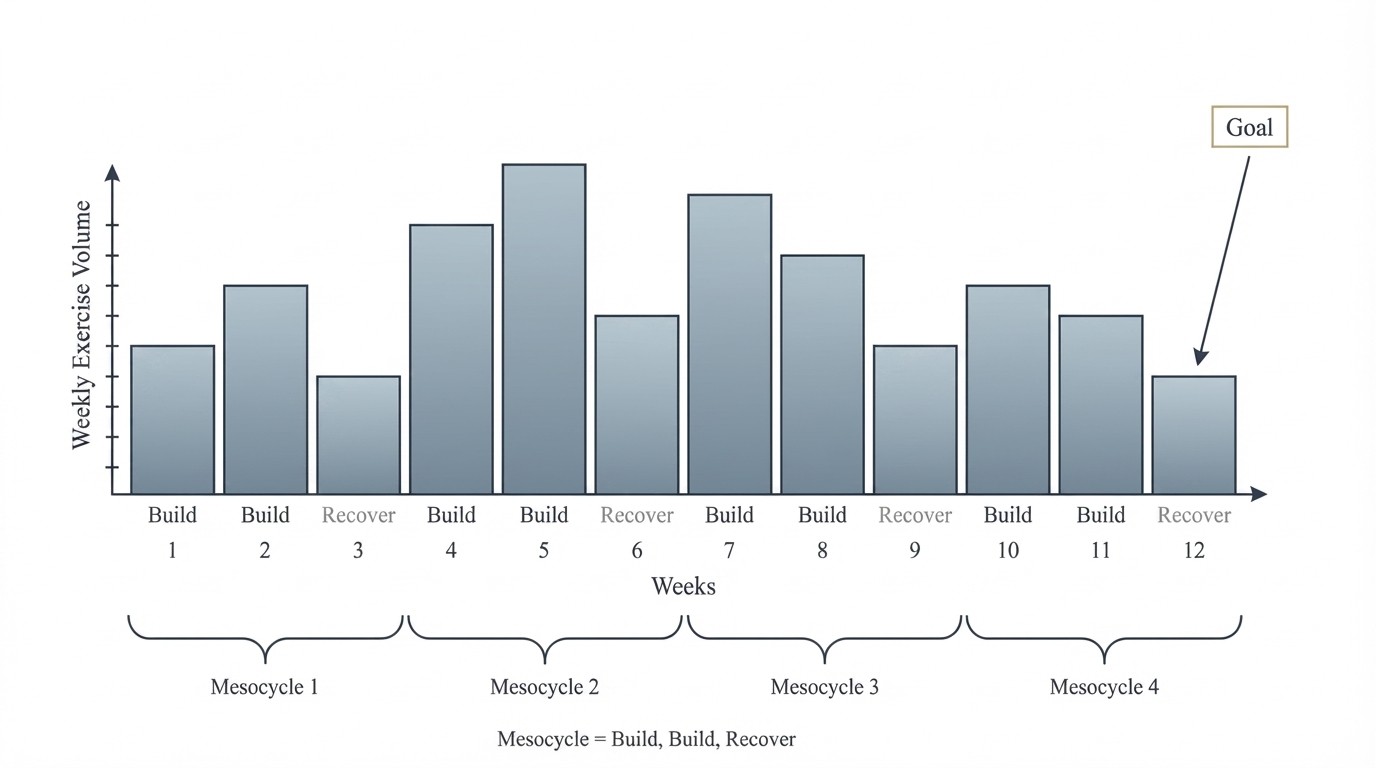
Figure 5. Mesocycles manage accumulated fatigue from week to week. Several loading weeks are followed by an unloading or recovery week, allowing fatigue to fall before the next build begins.
A useful question when reviewing a plan is:
Are there easier weeks built into the programme?
Across larger blocks (macrocycle)
The longest recovery pattern happens across months.
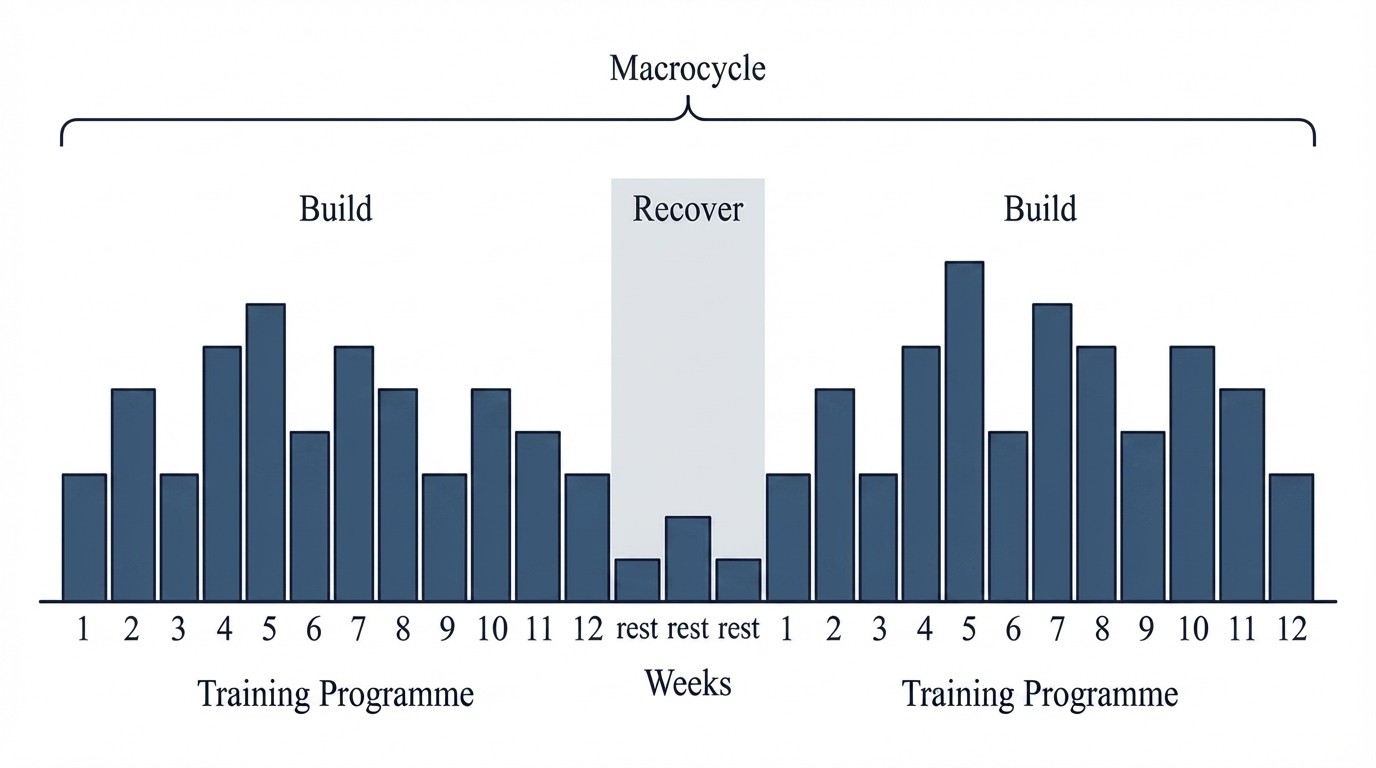
Figure 6. Macrocycles manage long-term fatigue and usually consist of 3–5 mesocycles followed by an active recovery or off-season period of 2–6 weeks to allow recuperation before the next major build begins.
No training block can continue indefinitely without loss of freshness.
Most people improve clearly, then level off, then eventually drift backward if recovery never arrives.
This is why good training blocks always have an ending.
A deliberate easier period allows deeper fatigue to clear before the next phase begins.
Without this larger recovery, people often remain flat or slowly drift backward.
Are there longer periods where training steps back properly?
As rough coaching guidelines, in most cases:
training blocks last about six to fourteen weeks
off-seasons usually need at least two weeks
three to four major training blocks each year can work well for many people
The exact length depends on the person.
Life stress matters. Event demands matter. Experience matters. Personality matters.
Some people handle long blocks well. Others improve more from shorter, sharper periods followed by earlier recovery.
The best plans respect both training stress and life outside training.
Recovery is not what interrupts progress. It is what allows progress to continue.
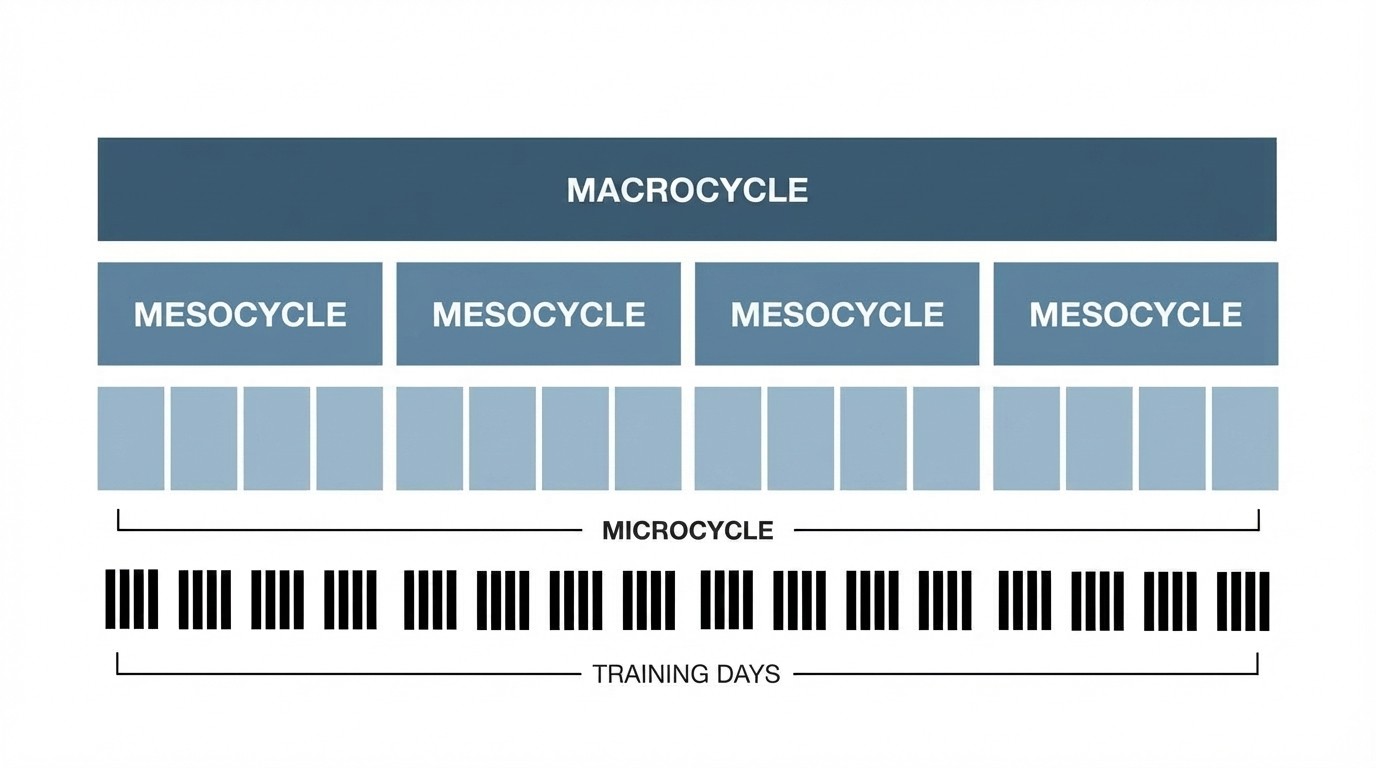
Figure 7. Training is organised in nested layers. Individual training days form a microcycle, microcycles form a mesocycle, and mesocycles form a macrocycle. Each level provides structure and direction to the one below it while balancing training with recovery.
Principle 6: Recovery Builds It. Repetition Keeps It. (Reversibility)
Recovery explains how fitness appears. Reversibility explains why it must be protected.
Fitness does not stay simply because it was once built.
The body keeps what it is asked to keep.
When a demand disappears, that ability gradually fades.
This is reversibility.
It is why training always involves choice.
You cannot push every quality hard all the time.
As one area is emphasised, others need smaller amounts of work so they do not disappear.
This is where maintenance becomes important.
A physical quality usually needs far less work to hold than it needed to build.
In many cases, a much smaller amount of work than was needed to build an ability is enough to maintain it for a period of time.
That allows attention to move elsewhere without losing what has already been gained.
For example, if strength endurance becomes the main focus, the other qualities do not disappear.
Technique, endurance, and speed remain present, but at lower levels. And the more recent it was since they were last trained, the better the memory.
This keeps the full system alive while one area moves forward.
A useful question when reviewing a plan is:
Can you see one quality being built while others are being held?
A strong plan usually shows this clearly.
One quality rises. Others stay steady.
Later, the emphasis changes again.
That creates a wave through training.
That wave allows progress without sacrificing abilities already developed.
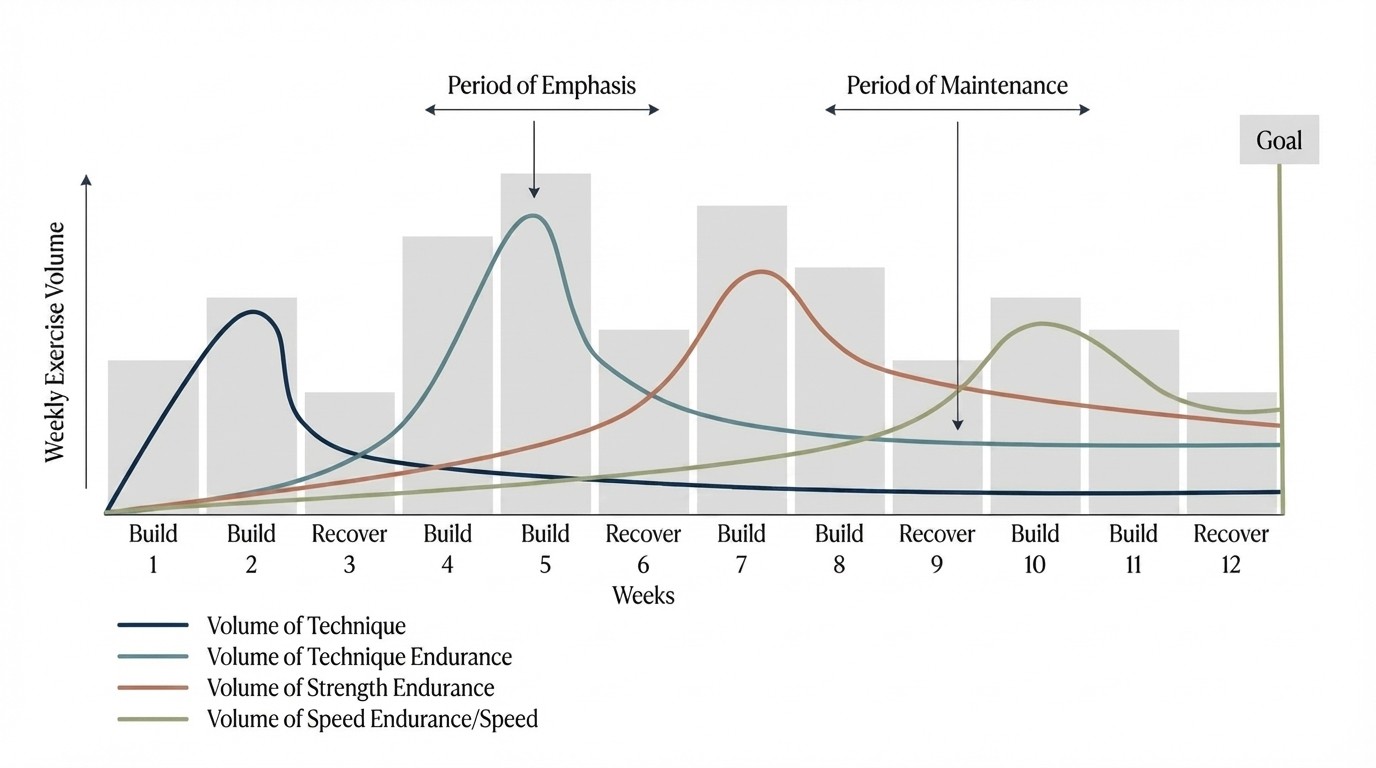
Figure 8. Training uses waves of emphasis so that each ability is developed in the right order and at the right time. Before and after its main period of emphasis, that ability is held in maintenance while another becomes the priority.
Why Smart Training Often Looks Simpler than Expected
These principles are not complicated once seen clearly.
What is difficult is holding them together when real life begins to interfere.
Most poor training does not fail because effort is low.
It fails because too many good ideas are pushed at the wrong time, in the wrong order, or without enough recovery to let them settle.
This is why intelligent training often looks calmer than people expect.
The work is still demanding, but each part has a reason.
One quality is emphasised while another is held.
Load rises, then steps back.
Recovery is protected because adaptation depends on it.
Nothing important is added without asking what it may disturb.
The principles themselves do not change.
What changes is how they are applied.
Age changes it.
Experience changes it.
Life stress changes it.
Confidence changes it.
This is where coaching becomes more than prescription.
It becomes judgement.
Good judgement usually becomes visible in what training is actually producing:
Training — building ability
Maintaining — holding ability without further improvement
Overtraining — losing ability because fatigue is too high
Detraining — losing ability because stimulus is too low
And judgement usually matters most when the goal matters most.
Good training is often less about adding more and more — and more about deciding what must rise, what must hold, and what can wait.
These principles explain why some plans create steady progress while others fail despite high effort.
Used well, they make training clearer, calmer, and far more effective.
The Six Questions to Ask of Any Training Plan
Am I practising what the event actually demands?
Do I know which training quality this session is building?
Is the emphasis in the right order, with each phase building on the last?
Is the workload progressing?
Is recovery sufficient for adaptation?
Am I building one quality while maintaining others?
If this feels relevant to where you are now, you can get in touch here.
Get in touch →
Occasional notes on smart endurance preparation, realistic goal setting, and better decisions inside the training process.
Know someone this might help?